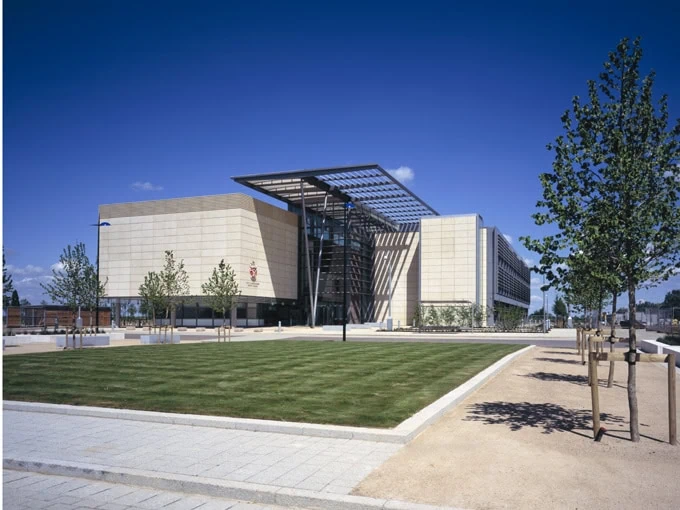
Tag: South Cambs District Council

  • Mayor advised to go ahead with bus franchising

    Changes to how the bus network is managed have moved forward another step.

    Bus franchising across Cambridgeshire and Peterborough has been recommended to Mayor Dr Nik Johnson now the findings of a public consultation have been reviewed. 

    Cambridgeshire and Peterborough Combined Authority (CPCA) transport committee met last Friday (January 24) to discuss the analysis from the consultation, which concluded in November last year. Over 1,600 stakeholders responded, including councils, bus companies, community groups and bus users. 

    Advert

    The consultation proposed two potential approaches for running the bus network: an enhanced partnership model and, a more favoured model of franchising. The committee unanimously voted to recommend that the Mayor chooses franchising as the best way to reform the region’s bus network. He is due to make a final decision early next month.

    Judith Barker, executive director of place and connectivity at CPCA, told the meeting: “We had to look at each case and all the representations and concluded that, to deliver the strategic objectives and to deliver value for money within the funding envelope, the best way forward was to recommend franchising.”

    Current system

    Currently, our bus services are mainly run by private operators which have control over the routes, timetables, ticket options, fares and frequency of buses. 

    Dr Nik Johnson, the Mayor of Cambridgeshire and Peterborough.

    Under the proposed franchising model, the CPCA would gain control over these areas and private operators would no longer be able to independently decide to withdraw services. 

    Instead, operators would bid to run services under franchise contracts, with the CPCA overseeing the process and monitoring operations based on travel needs rather than profits. It also means an integrated ticketing can be introduced, where the same ticket can be used across the network.

    A report put before the CPCA’s transport committee meeting revealed that 1,468 participants in the consultation provided an answer to whether they supported or opposed the bus franchising proposals.

    A total of 42 per cent of responses strongly supported franchising, with a further 21 per cent tending to support, putting 63 per cent of participants in favour of the new model.

    The report revealed that 18 per cent of responses neither supported nor opposed, while seven percent tended to oppose and a further seven percent strongly opposed.

    Rural services ‘woefully inadequate’

    South Cambridgeshire District Council responded to the consultation, saying “in principle” it supports the proposed franchising scheme. 

    The Council said it “wants the franchising decision to drive economic growth in new settlements” but also consider current transport needs and economic growth objectives. It particularly highlighted that “a key consideration” should be getting children and students to places of education and training. 

    The Busway. Photo: Guy Richardson

    It also shared firm words about the current situation with the consultation, saying: “The Council expects to see better bus services within South Cambridgeshire, and improved connections with other destinations such as Cambridge. 

    “Buses should be affordable and reliable. This is especially important for those most reliant on public transport. As a rural district, our residents have long suffered woefully inadequate bus services, and we expect these to improve significantly under a franchising arrangement.” 

    South Cambs added it “expects the CPCA to ensure it has the funding, capacity and capability to manage the transition and service” and is “keen to see” a transition to a net zero fleet and accessibility prioritised. 

    Councillor Peter McDonald, South Cambridgeshire District Council’s lead cabinet member for economic development, described the franchising scheme as “an opportunity for step change” at Friday’s CPCA committee meeting

    He told officers: “We fully support the work that has been done… but please keep rural connectivity in mind, especially for those areas where there isn’t a rail connection. Then, the whole principle of franchising and having to control that bus network is increasingly important.” 

    Further discussions

    Bus franchising will be discussed in detail at further meetings before the Mayor makes a final decision. According to a Combined Authority report, the total operational costs for franchising would be £9.65 million.

    The franchising option would require the Combined Authority to acquire bus depots. The capital costs of depots in the outline business case is £31 million, funded by £5 million non-ringfenced capital grant, £4 million ringfenced capital and £22 million borrowing.

    Reporting by Joe Griffin, Local Democracy Reporting Service. Additional words from HI HUB.

    READ MORE: Businesses Against Abuse – offering a safe place for those in need
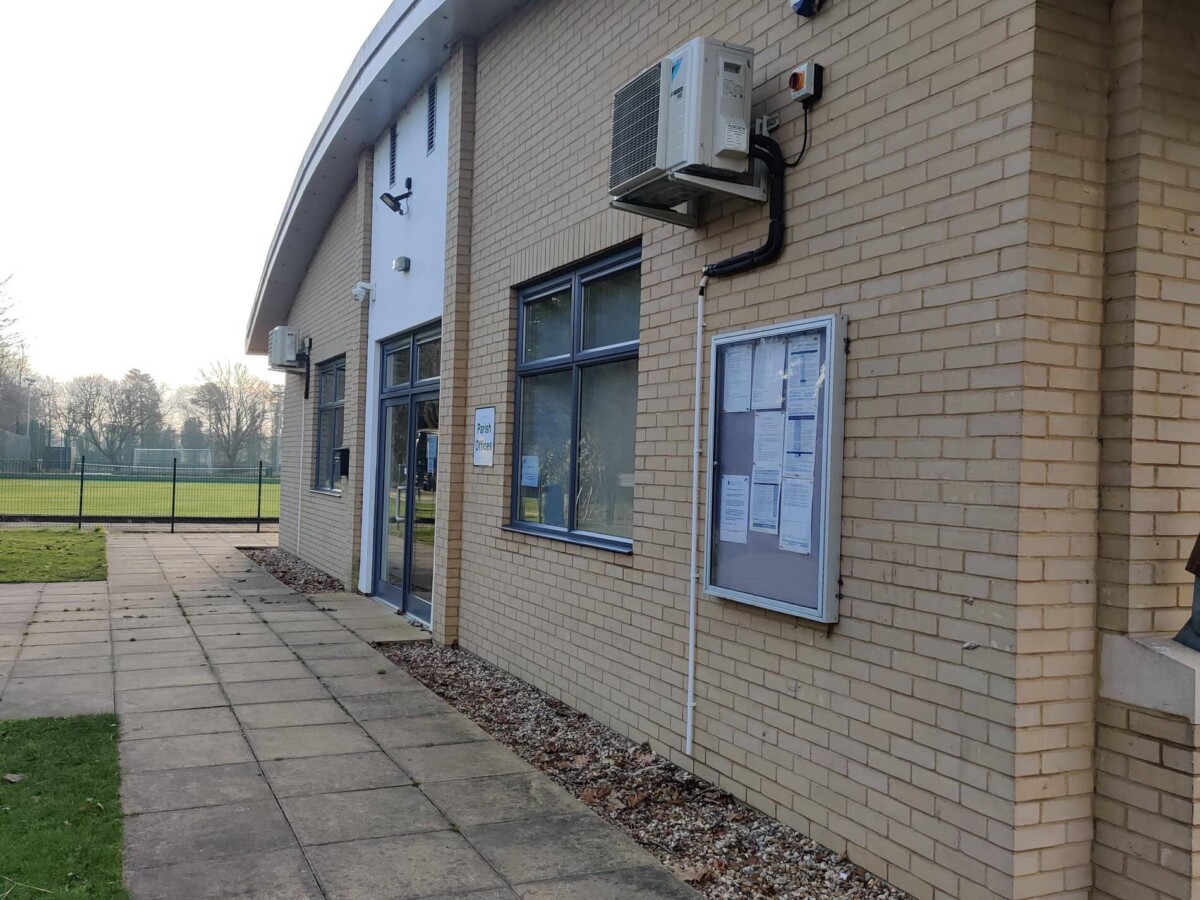
  • Parish Council vacancy follows resignation

    Parish Council vacancy follows resignation

    Histon & Impington residents have the chance to influence local decision-making and spending following the resignation of Councillor Walter Davey from the Parish Council. 

    Walter served on the Council for almost seven years, first joining in May 2018, and was an active member of the Planning and Development Committee. 

    On behalf of all councillors, Council chair Yvonne Murray thanked him for his service, saying he helped her “further understand that every councillor was there to make a difference and everybody deserved to be heard”.

    Advert

    She continued: “Walter is an amazing engineer and innovator; he has confirmed that he will always be willing to help out the Council with repairs to the recreation ground equipment. One of his greatest strengths is fixing things that no one else can.”

    Notice of Vacancy 

    The Electoral Commission told HI HUB that when such a vacancy arises, a Parish Council is “legally required to publish a public notice of the vacancy” and this “must be displayed in a conspicuous place within the parish.” But this legislation dates back to 1972, so there is “no legal obligation” to promote such vacancies online, though “using additional channels, such as social media or newsletters, is considered good practice”. 

    For example, Cottenham Parish Council currently has a Notice of Vacancy dated 16 January on its website following a councillor’s recent resignation. At time of writing, it had not been posted on Cottenham Parish Council’s Facebook page. 

    The Notice of Vacancy to replace Walter was formally declared on 8 January and displayed on the Parish Council notice board at the Rec. To trigger a by-election, 10 people eligible to vote in the parish have 14 working days after that date to give notice in writing to the Returning Officer at South Cambridgeshire District Council. 

    Co-option

    If too few electors have made contact with the Returning Officer by the time the Notice of Vacancy expires on Tuesday 28 January, Councillors can select an individual of their choice on the electorate’s behalf.

    The Parish Council told HI HUB that further information about fulfilling the vacancy by co-option will be outlined on its website and social media. The clerk explained this has been the procedure when other vacancies have arisen. 

    To be eligible to stand as a candidate at a Parish Council election, or for co-option to the Council, you must be at least 18 years old and be a British citizen, an eligible Commonwealth citizen, a citizen of the Republic of Ireland, or a qualifying EU citizen with retained rights.

    Guidance is outlined on the Electoral Commission website, which states that candidates must also meet at least one of the following four qualifications:

    1. Be a registered local government elector for the parish in which they wish to stand. 
    2. Have occupied as owner or tenant any land or other premises in the parish area for 12 months. 
    3. Have worked in the parish area for the past 12 months.
    4. Have lived in the parish area, or within three miles, for 12 months.

    READ MORE: How well do you know your bins?

  • Referendum on 4-day week trial would be ‘meaningless’

    Referendum on 4-day week trial would be ‘meaningless’

    A referendum on the four-day week trial at South Cambridgeshire District Council would be “meaningless” the authority’s leader has said.

    Cllr Bridget Smith said the planned consultation will focus on people’s experiences of using council services, rather than asking a yes or no question on whether people support the trial.

    She said gathering information on people’s experiences would be “very useful” to help the authority make a decision on whether to keep the 4-day week permanently. However, opposition councillors criticised the fact that people would not be asked whether they want to “fund a 4-day week”.

    Advert

    Consultation to go ahead

    The district council introduced the 4-day-week trial for desk-based staff at the start of 2023, before later expanding it to include staff working in the waste collection service.

    Under the trial, staff receive full pay for working fewer hours, but are expected to complete all of their work in that time. The authority began the trial to see if it would help with the staff recruitment and retention problems it was facing.

    A public consultation will open on Monday 27 January and will ask people to share their views on using council services before and during the 4-day-week trial. Members of the public completing the survey will also be asked if they would be more or less likely to apply for a job if a 4-day week was offered.

    ‘Meaningful information’

    Cllr Smith told councillors at a Scrutiny and Overview committee meeting last Thursday 16 January that the consultation had been put together with the help of an independent organisation. She said the consultation would give the authority “meaningful information” on people’s experiences using council services.

    The consultation on the 4-day week will be launched on Monday 27 January. Photo: StartupStockPhotos from Pixabay

    Cllr Smith said: “The purpose of this consultation is to ascertain what the experience has been of our residents, our businesses, our partners, our stakeholders, during the 4-day-week trial.

    “Has there been any change in people’s experiences of our services as experienced prior to the trial starting, and as experienced during the trial.

    “This is very useful information, as it will either support or not the vast amount of evidence that has been amassed for us about the trial by universities in Cambridge and Salford.

    “Additionally, there is a legal requirement for us to consult. It is very important we fulfil that requirement, and it is important to do so in a way that is legally compliant and meaningful. It is very important to us to know what our customers of all types think of us, and what their experiences have been.

    “This, with all the other information we have – the surveys of staff, the KPI data – will help us as a council and cabinet to make an informed decision – during this summer probably – whether we become a four-day-week employer.”

    The opposition’s view

    However, the leadership faced challenges from opposition councillors on the proposed consultation. 

    Cllr Tom Bygott said the “obvious question” of asking people whether they support the 4-day week was not in the consultation.

    He said: “We are not going to have any view whether, as a taxpayer, people want to fund a 4-day week, but we are going to get a view whether they would want to be an employee working in that way.”

    Cllr Smith said Cllr Bygott was suggesting a referendum, which she argued would be “meaningless”.

    She said: “We are a service provider. What is meaningful is people’s experiences of our services, so that is what we are doing.”

    Cllr Smith added that there were text boxes in the survey where people could leave whatever comments they wanted about the trial. However, she stressed the consultation was not a referendum and said she would “not allow it to become a referendum, because that is not meaningful and not useful” for the council.

    Think back to 2022… 

    Cllr Heather Williams highlighted that people were being asked in the survey to compare their experiences of using council services before and after the trial. She said she understood why the authority wanted this information, but said they were asking people to remember what happened years ago.

    Residents will be asked for their views on Council services since the 4-day week was introduced.

    Cllr Williams said: “I know I reported a bin being missed, but whether I did that in 2022 or in 2023, it is too long of a gap.”

    She suggested it might have been better to have conducted a survey of people’s experiences before the trial started, to have a base set of data to compare to, as she said people will “really struggle” to accurately remember what they were doing years ago.

    Cllr Smith said it was “nonsense” to suggest the authority should consult on whether to carry out a trial. She added that the district council had hoped to hold the consultation back in March last year, but said the “threat of financial penalties” made by the previous government meant they could not do this.

    Cllr Williams argued the district council could have consulted on people’s experience of using its services, even after the initial three month trial.

    Cllr John Williams, lead cabinet member for resources, said the survey was intended to “add value” to other performance measures which the district council had been using to gauge the effect of the trial. He said the survey would help the authority “check” these measures were giving “correct information”.

    Disagreements continue

    A week on from the discussions, disagreement between the two parties about the consultation continue. To the referendum point, the South Cambridgeshire Liberal Democrat Group insists “the survey includes many questions to gather feedback and views” and there is an opportunity for contributors to say whether they agree or disagree with the 4-day week.

    A spokesperson for the group said: “The survey includes free-text boxes throughout for additional feedback. There is not a referendum type question as we want to ensure we have more detailed feedback on whether four-day-week working has had an impact, positive or negative, on services.”

    Meanwhile, a press release issued by South Cambridgeshire Conservatives last night (Wednesday) complained its calls for a referendum have been “snubbed” by the Lib Dems. 

    Cllr Williams said: “The administration’s claims that a referendum would not be useful for the Council are disappointing. This demonstrates a complete contempt for the feelings and pockets of residents shelling out 37 hours pay for 32 hours work – all when the Lib Dems are planning to increase Council Tax by the maximum amount again.”

    South Cambridgeshire District Council says the consultation platform will go live on Monday 27 January. 

    Reporting by Hannah Brown, Local Democracy Reporting Service. Additional words from HI HUB.

    READ MORE: Two local groups selected for 2025 Co-op Community Fund

  • Council sets out 4-day week consultation

    Council sets out 4-day week consultation

    South Cambridgeshire District Council (SCDC) will outline plans for a public consultation into its 4-day week today (Thursday). 

    The Council’s Scrutiny and Overview Committee will discuss proposals to get feedback from residents on the controversial working pattern. Subject to final sign-off, a “full public consultation that anyone, anywhere can respond to” is being put forward. 

    This means even people who live outside the district can also share their views on the scheme, though their questions will be tailored slightly because they do not directly use council services. For example, a participant from Australia can take part, but is not able to give feedback on areas such as bin collections. 

    Advert

    The planned consultation will be for eight weeks, beginning on 27 January and closing at 11:59pm on 23 March. It will be possible to have a say on how Council services have been since January 2023, when a trial of a 4-day week began.

    The information gathered will help District Councillors decide on next steps. 

    ‘Always’ going to consultation

    The Council had previously postponed a public consultation expected in April 2024 because of the previous Government’s intense scrutiny of the initiative. This included warnings that SCDC may face financial penalties if the 4-day week arrangements continued. 

    However, the Government changed and removed any mention of such penalties in its Local Government Finance Settlement for 2025/26 – and this means the Council can now consult on the matter. 

    Cllr John Williams, SCDC’s Lead Cabinet Member for Resources, said the Council has “always made it very clear” there would be an opportunity for stakeholders to share their views on how the 4-day week has impacted them. 

    He said: “We have not been able to [launch a public consultation] up to this point because of threats made by the previous Government. With those threats lifted, we are now able to begin this process. 

    “Our approach is designed to ensure those who have used our services during the four-day week arrangements can quickly and easily share their views – though anyone, anywhere will be welcome to submit comments.”

    As SCDC and Cambridge City Council share some key services – such as planning and bin collection – residents who live within the city are also being encouraged to comment on their experiences.

    Justifying the 4-day week

    SCDC staff deliver 100% of their work, in around 80% of their hours, for 100% pay. 

    Those at desks have been working 30 hours per week over the four days. Waste operatives are in 32 hours because a trial found it was not possible for them to deliver services within the 30. 

    The Council says the aim was to help with recruitment and retention issues it has been experiencing, rather than relying on more expensive agency staff which can be disruptive. 

    It believes financial savings have been made and the performance of their services have either been maintained or improved during the trial. Also, opening hours have also been maintained throughout. 

    Last summer, the Universities of Cambridge and Salford published an independent report on the Council’s performance during its trial of the four-day week. Of 24 key performance indicators, the analysis found 22 improved or remained the same. 

    The improved areas included percentage of calls to the council’s Contact Centre answered, average number of weeks to determine householder planning applications and the average number of days to process Housing Benefit and Council Tax changes. 

    A financial assessment of the trial outlined a known full year cost saving of £371,500. This was mainly due to permanently filling 10 posts that were previously identified as “hard to fill”. 

    READ MORE: Council u-turns on green grant scheme following HI HUB investigation

  • Council u-turns on green grant scheme following HI HUB investigation

    Council u-turns on green grant scheme following HI HUB investigation

    South Cambridgeshire District Council (SCDC) have admitted that they wrongly excluded Histon & Impington and six other South Cambs villages from a funding scheme to support Net Zero initiatives across the District.

    Data error

    When the Net Zero Villages Grant scheme was announced in December 2024, Histon & Impington was deemed ineligible to apply, on the grounds that the village was defined by the Office for National Statistics (ONS) as part of the Cambridge Built-up Area.

    But HI HUB enquires with the ONS as to why that definition was applied revealed that Cambridgeshire and Peterborough Combined Authority – who set the rules for the scheme – had based it on out-of-date information, rather than the 2021 census.

    An ONS spokesperson told HI HUB: “It appears that the data… is from the 2011 Built Up Area (BUA) geography. Looking at both the 2022 and the 2024 version of the BUA classification, the village of Histon and Impington is a separate BUA. Please see the most recent version of the BUA classification which can be found here.”

    Extended deadline

    SCDC is responsible for managing the grant scheme for the Combined Authority. HI HUB challenged them with the ONS response, and this has resulted in Histon & Impington, Milton, Girton, Great and Little Shelford, Fen Ditton, Fulbourn and Teversham all being eligible to apply for the Net Zero Villages Grant – but not Orchard Park.

    To correct the record, SCDC is now contacting these communities to invite them to apply for the grant.

    Community groups, businesses and the Histon & Impington Parish council are now all able to submit applications for grants ranging from £20,000 to £100,000 to support “transformative, community-led projects” and help villages become low carbon, more sustainable and more resilient to the effects of climate change.

    SCDC is also extending the window for applications until 2 February 2025.

    They say: “To confirm a project’s eligibility, applicants should open the map, select Cambridge in the ‘Settlements’ table and confirm the community asset or project site is outside of the yellow shaded area. This area represents the Cambridge built-up area, as classified by the ONS using the 2021 Census figures.

    “Potential applicants should email climateandenvironment@scambs.gov.uk to have any questions answered, or to arrange a time to discuss their application 1-2-1 with an officer.”  

    READ ALSO: Green grant opportunity denied to villages near Cambridge

  • Who you gonna call?

    Who you gonna call?

    From fallen trees to flooding, knowing who to call when things go wrong in the village is the first step to getting them put right. Denis Payne lists the most common incidents – and what to do about them.

    Knowing who has the authority to sort out problems that arise in public places is a useful starting point for resolving them, but with four levels of ‘local’ government and several other bodies involved, it’s difficult working out who does what and who to speak to if things need fixing.

    Local government

    Some of the issues are dealt with by ‘local’ government and other bodies paid for from our Council Tax, so here are some clues:

    The Parish Council – closest to us, 19 Councillors elected from Histon and Impington, and with offices in the village. They have few duties (i.e. things they have to do), but for us, among other things they provide the civic cemetery, recreation and play areas, and look after various areas of the village, including the Green. They’re our voice to higher authorities – particularly on planning.

    The District Council – based at Cambourne, with 3 Councillors for us to vote in. They collect refuse, manage most of the planning decisions, provide and manage housing, are responsible for the key drains, and other environmental issues (noise, pollution).

    The County Council – now based at Alconbury, with just one Councillor representing the village, Orchard Park and King’s Meadows. They provide essential social services for vulnerable adults and children. Schools and education (but not academies), maintain highways (but not the A14, M11) and dispose of waste (collected by the District Council). 

    The Combined Authority are based in Huntingdon, and the Mayor is elected by everyone in Cambridgeshire and Peterborough. Other members of the Board are appointed by Unitary (Peterborough), County and District (& City) Councils. They have funding from the Government, and our Council Tax. They support public transport, and are responsible for top level transport planning. They support and deliver a range of projects focusing on economic growth and helping to improve lives.

    Other key players

    Also funded by Council Tax are some emergency services:

    Cambridgeshire Constabulary – there’s a single elected Police and Crime Commissioner for Cambridgeshire & Peterborough. On more day-to-day issues there’s a Chief, Deputy Chief and Assistant Chief Constable.

    Cambridgeshire Fire & Rescue – is run by a Board of 17 Councillors appointed by the County Council and Peterborough City Council.

    And finally:

    Greater Cambridge Partnership – has members appointed by City, District and County Councils and also business and university representatives. It’s funding comes from Government grants. Most times it is unable to act without the support of one or more of the Councils – who are therefore the final decision maker.

    Dealing with a problem

    As always, if it is an emergency, as someone is hurt or lives may be at risk, call 999. Most Councils only work office hours (and not weekends) so outside those hours you’ll only be able to report something – and it will take time to fix.

    Several problems could require police action but aren’t life threatening. In that case 101 is the number, but in Cambridgeshire you can jump the inevitable phone queue by using their new online reporting system at www.cambs.police.uk/ro/report/. Just click ‘Report’ on the left hand side of the home screen. Reports are dealt with in exactly the same way as 101 calls.

    What to do if…

    Here are some of the most common incidents that arise in the village – and what to do about them.

    Anti-social behaviour – is always a Police issue, so call 101 (or 999 in an emergency) or www.cambs.police.uk/ro/report/. Even if you think nothing will happen, do report it. The total amount of ASB influences policing patterns.

    Bin not collected – needs to be reported online after 3:30pm on the day of the missed collection, at https://forms.scambs.gov.uk/MISSEDBIN/launch

    Broken glass in play areas – the Parish Council has a ranger who will clear this (during work hours). Call 01223 235906.

    Fallen tree – if it’s blocking a road, it’s a highways emergency so call the County Council on 0345 045 5212 during office hours, or Police on 101 or www.cambs.police.uk/ro/report/ outside of those hours. Otherwise, it will be the owner who will need to deal with it. The Parish Council may be able to help find out who that is, so call them on 01223 235906.

    Flooding (roads) – it’s a highways emergency if the road is impassable so call the County Council on 0345 045 5212 during office hours, or Police 101 or www.cambs.police.uk/ro/report/ outside of those hours.

    Overflowing bin – on the High Street, report to a nearby shop. Elsewhere, report to the Parish Council on 01223 233577. Because these are cleared by the District Council it may take a while to get sorted.

    Potholes (and all non-emergency road faults) – have to be reported online at highwaysreporting.cambridgeshire.gov.uk/

    Power cut –going online is the quickest way to report a power cut and get updates.  www.powercut105.com/en/report-a-power-cut, or call 105.

    Seen something suspicious? – tell the Police on 101 or online at www.cambs.police.uk/tua/tell-us-about/soh/seen-or-heard/

    Sewage issues – Anglian Water deals with these so call them on 03457 145 145

    Smell gas – call 0800 111 999. This is the National Gas Emergency Line and is staffed 24/7.

    Street light out – call 0800 783 8247 or report online at www.lightingcambridgeshire.com/contact-us/report-fault.htm

    Traffic lights – if all the lights are out, that’s an emergency so call the County Council on 0345 045 5212 during office hours, or Police 101 or www.cambs.police.uk/ro/report/ outside of those hours.

    Water leak (road or path) – Cambridge Water supplies water to the village, so call 0800 316 76 76.


  • Homes for Ukraine Support Programme – South Cambs

    We have received this request to help South Cambs find people to support the Homes for Ukraine Scheme. They have said that due to the generosity of local communities, South Cambridgeshire is the district area with the highest number of visas granted in the country. This means the number of arrivals is high. The Council’s housing officers have been carrying out the welfare checks to ensure hosts and guests are settling in. However, as re-matching is now also being carried out by the Council, they need to bring in extra resources in paid roles and want to find people with the right skills who would consider joining the team carrying out this important work.

    They know many people want to support the scheme locally who may not have been able to be a host, but have the skills they are looking for, maybe retired or not in work now, but would be keen to commit to a role to help deliver this important work.

    What they are looking for?

    • Commitment to work at least 3 days a week, up to full time, for one year
    • Good communicator
    • Previous experience or knowledge in safeguarding would be advantageous
    • Good listener and ability to empathise and give advice to Ukrainian guests who may be suffering from trauma
    • The ability to travel using own car all over South Cambridgeshire to visit the homes of hosts
    • Ability to use Council translating services to support conversations with guests where necessary
    • Good attention to detail to ensure information from visits is logged correctly and any issues reported and referred to relevant service
    • Confidence to ask guests or hosts further questions to uncover underlying issues
    • Sensitivity to cultural differences and able to put people with a variety of backgrounds at ease
    • Confidence working with basic Microsoft computer programmes such as Word, Excel and Outlook as spreadsheets are used for recording and collating information

    They are looking for people who can start quickly to support the team.

    The hourly rate for the role is £13.33 to £15.93


    Anyone wanting to find out more should email Susan and Dan on susan.hinawski@scambs.gov.uk and Daniel.toussaint@scambs.gov.uk. Please include in your message that you are interested in the role and provide your contact details. Susan or Dan will call you back as soon as possible to discuss the role.

  • Waking up to climate change

    Waking up to climate change

    Climate change will be in the national news as the Glasgow COP26 summit approaches, but local efforts will be vital if zero-carbon targets are to be met. Liz Hill reports on how the village is getting involved.

    The global UN climate summit known as COP26, taking place in Glasgow in early November, will hopefully see world leaders make new commitments to actions that their countries will take to reduce greenhouse gases and prevent catastrophic increases in global temperatures. But if they are to be delivered, those commitments will rely on the actions of all citizens, and every community has its part to play – Histon & Impington included.

    What is COP26?

    ‘COP26’ is shorthand for ‘the 26th Climate Change Conference of the Parties’. This year’s event is being hosted by the UK, which is also setting the agenda. It will see international delegations come together to agree coordinated action to tackle climate change.

    The aim of COP26 is to make better progress towards meeting the commitments made in an international treaty on climate change that was adopted in 2015 –  known as ‘the Paris Agreement.’ The summit will culminate with the countries agreeing to targets for reaching the ‘net zero’ carbon emissions needed to stop the devastating advance of global warming.

    The conference will be delivered in two ‘Zones’. The Green Zone will be where the general public, youth groups, civil society, academics, artists and businesses will run talks, events, exhibitions and workshops that aim to help the UK’s communities build awareness and make commitments around the climate change agenda.

    The Blue Zone is where the governments will negotiate the targets that they will buy into, and is exclusively for heads of state and expert climate delegates from 197 countries who will be sharing their information, advice and stories.

    Local champion

    Among those involved in these world-changing conversations will be Histon & Impington resident and South Cambs Councillor Pippa Heylings. Her career has seen her working both locally and internationally to encourage sustainable development, biodiversity conservation and a low carbon, climate resilient world. It is therefore no surprise that, in recognition of her extensive knowledge and influence over environmental agendas across the world, she has been given a coveted space in the ‘Blue Zone’ at the conference.

    Pippa Heylings

    Among Pippa’s aims is to reinforce the message that action at local level is as important as national policy in halting climate change, because change will only happen if individuals and communities do their bit. She is Chair of South Cambs District Council’s Climate and Environment Advisory Committee, national Lead Lib Dem for the Environment, Economy, Housing and Transport Board, and leads on the cross-party Climate Change Task Force set up by the Local Government Association in the run-up to the conference. The task force members have been meeting regularly with all the Ministers nominated as COP26 Champions for key sectors across Government.

    The aim of the group is to get local and regional governments across the world recognised as a vital part of national efforts to reach climate change targets. They are asking for a whole day of the conference agenda to be dedicated to ‘sub-national’ government activity – which in the UK means County, District and Parish Councils. They also want the final COP26 agreement reached by national governments to commit to giving the financial and political support that councils will need to bring about change in their communities.  

    Off the starting blocks

    Here in Histon & Impington, the community isn’t sitting waiting for the outcome of COP26 before taking action. The Neighbourhood Plan came into force earlier this year, supporting the Parish Council to look for opportunities to reduce carbon emissions in the community and to develop community energy schemes. Some community groups are already in action too, not least HITrees and its community planting events, and the new charity H&I Green Spaces, which is securing the future of Abbey Fields and preventing their use as development land.

    South Cambs District Council is fully behind community efforts. Together with around 2,000 local councils across the world, it has declared a climate and ecological emergency. Its business plan priority is ‘being green to our core’ and earlier this year its green efforts were commended in the Public Sector Transformation Awards as being “exemplary”.

    As part of its efforts, South Cambs has adopted a Zero Carbon Strategy to bring down its own emissions, as well as a Doubling Nature Strategy aiming to increase the tree canopy to absorb more CO2 from the atmosphere. Last year Histon & Impington was able to take advantage of the three free trees it offered to every parish council in the district, and that offer has been doubled this year, with six free trees available.

    To support businesses and communities to do their bit to reduce their carbon emissions, South Cambs has prepared a Climate Emergency toolkit, and earlier this year it ran a Climate and Environment Fortnight which presented activities aimed at helping residents think about how to live more sustainably.

    There is no doubt that the building blocks are being put in place to encourage and support our village to step up to the enormous challenge of climate change. It’s up to each of us now to engage with the process and take our own steps towards the zero carbon future we so urgently need.

    Community organisations in Histon & Impington can do their bit to inspire action on climate change by joining in with the Great Big Green Week, a national week of events from 18 to 26 September. Thousands of events will celebrate how communities are taking action to tackle climate change and protect green spaces. Event organisers can sign up to take part.   

  • Council gives cautious backing to East West rail plans

    Council gives cautious backing to East West rail plans

    South Cambridgeshire District Council will be supporting the principle of a ‘southern’ route for the Bedford to Cambridge section of the proposed East West Rail line, but is calling for more detail. 

    The preferred option for the scheme would see the railway, if it goes ahead, approach Cambridge through parts of South Cambridgeshire including Cambourne, Caldecote, the Eversdens, Haslingfield, Hauxton and the Shelfords, rather than a ‘northern’ route that would pass close to Histon.

    Campaigners living along the southern route have raised questions about the level of scrutiny given to the plan. Councillors agree that further details are needed on a range of technical issues related to noise and landscape, and say the local impacts need to be better explored and addressed.

    READ ALSO: Transport Minister finds “no reason” to rethink East West rail route

    Cllr Neil Gough, Lead Member on the project, said: “Back in 2018 we said that we supported the principle of the Bedford to Cambridge section of East West Rail, but at this stage significant further work is still needed to allow us to fully assess and provide further comment on the local impacts of the scheme.”

    The Council will be responding to the ongoing East West Rail consultation raising its concerns. It will also be questioning the environmental sustainability of opening a new line with diesel trains. East West Rail make a number of general commitments to delivering a net zero carbon railway, but the Council has pointed to contradictions in the consultation documents. They claim “the use of diesel-powered trains is not a project objective” but at the same time state “the railway shall not at this point in time be electrified”.

    Overall SCDC believes the new railway has the potential to bring significant opportunity to South Cambridgeshire, but said: “It is vital that the East-West Railway Company continue to work closely with local councillors, officers and residents so that everyone’s views are heard as part of the process.” 

    SCDC’s draft response to the consultation can be found here.

    East West Rail’s consultation runs from 31 March, until 9 June. Members of the public can view the consultation and submit their own comments here.