
To bin or not to bin… that is the question. And then should it be, green, blue or black? Despite our best intentions, the world of waste disposal can be a messy minefield. Lucy Callington is here to help you get sorted.
Even something as simple as making a cuppa can cause a bin quandary. Take-away coffee cups can’t be easily recycled, but making a brew at home can be tricky too. And even though used tea bags and coffee grounds can be tossed in the green bin, plastic milk bottles have to go in the blue… and, ay there’s the rub… the small pull-tabs from the top of the milk bottle can only be put in the black.
Unwanted wine glasses and glass tumblers (broken or unbroken) can go in the black bin, but glass jars and bottles should be stashed in the blue instead. And did you know that, if you buy fruit in a punnet, the plastic can be recycled in your blue bin, but oddly enough, the mesh nets from oranges cannot?

So if you’re trying to up your recycling game this new year, here’s a few pointers to help you play this bin bingo!
Into the Blue
Your blue bin is the go-to place for most of the items we use and discard on a daily basis:

- Foil – ideally rolled in a ball the size of a tennis ball
- Cling film
- Cardboard – except if it’s wet, when it should go in the green bin
- Egg cartons
- Tetra Pak cartons
- Aluminium tubes – like tomato puree
- Bottle tops and plastic lids
- Sandwich packs – without the plastic window (which needs specialist recycling)
- Ice cream tubs
- Yoghurt pots
- Plastic fruit punnets
- Plastic milk bottles
- Aerosols
- Glass jars and bottles
- Broken glass jars and bottles
- Bubble wrap
- The foil base of BBQs
Going Green
The green bin can swallow up most kitchen waste, cooked and uncooked food and more:

- Corks – natural only
- Paper and kitchen towels – use these to line your caddy
- Teabags
- Coffee grounds
- Tissues
- Bread
- Some butter wrappers (made from greaseproof paper)
- Bamboo
- ‘Bagasse’ food packaging
The ‘go-the-extra mile to recycle’ items…

And then there are those annoying items that can’t be recycled at home. While it’s tempting to hurl these in the black bin and have done with it, with a little more effort these items can have a second life.
Plastic bags, biscuit and crisp packets can be recycled at most major supermarkets in bins labelled, ‘soft plastics’. Our local Co-op also has a bin beside the entrance for these, which is emptied every day due to popular demand.
All medicines and inhalers should be returned to a pharmacy or other healthcare provider which accepts them.
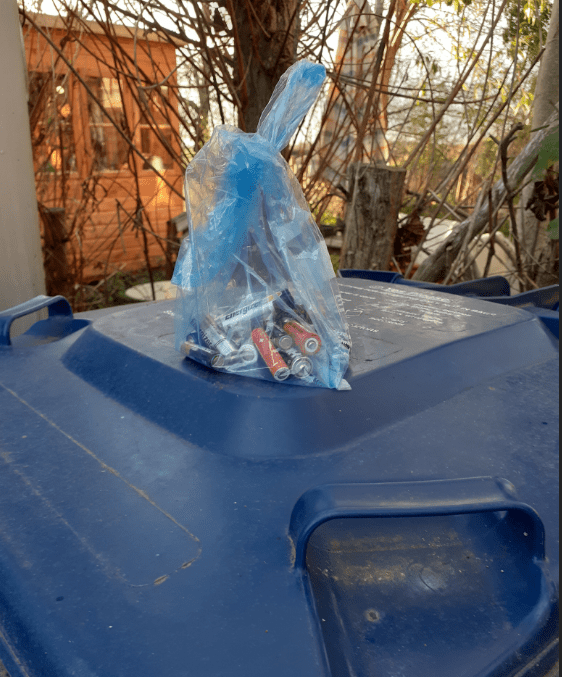
Medicine blister packs can be recycled in branches of Superdrug. Batteries can be recycled in some supermarkets and shops, such as Tesco Milton; printer ink cartridges can be taken to the Salvation Army shop, or Rymans branches in Cambridge; and look out for organisations that recycle baby food and cat food pouches.
If you know of any other specialist recycling schemes, do let us know at news@hihub.info
Back in Black
If all else fails, there is the black bin – to scoop up everything that cannot be reused or recycled. And for larger items, and electrical goods, there is the Household Recycling Centre at Milton. Your black bin is the place for:

- Fruit mesh nets
- Polystyrene and packing chips
- Mirror glass, wine glasses and tumblers (broken or unbroken)
- Pringles tubes – although sometimes these can be recycled at specialist centres
- Nappies
- Wipes – bin them to prevent toilet blockages
- Cooking oil – contained in small plastic bottles
- Plastic corks
- Sponge scourers
- Jute bags
- Wrapping paper that contains foil
- Coffee cups
- Post-It notes – the glue on these means they can’t be put in the blue bin
- Sello-tape
- Cigarettes – including butts
- Candles – these can also be melted into new candles
- Black plastic bags
- Cable ties
- Cat litter and animal faeces!
- Ash from briquettes or coal
An A-Z of rubbish
Find a full list of what can and can’t be recycled on the South Cambs District Council’s website here. And if you can think of an item that isn’t covered you can send feedback to the council here.
To find out more, visit What are my bins for? – South Cambs District Council.
[copy updated 17/1/25 and 20/1/25]