

Author: chris

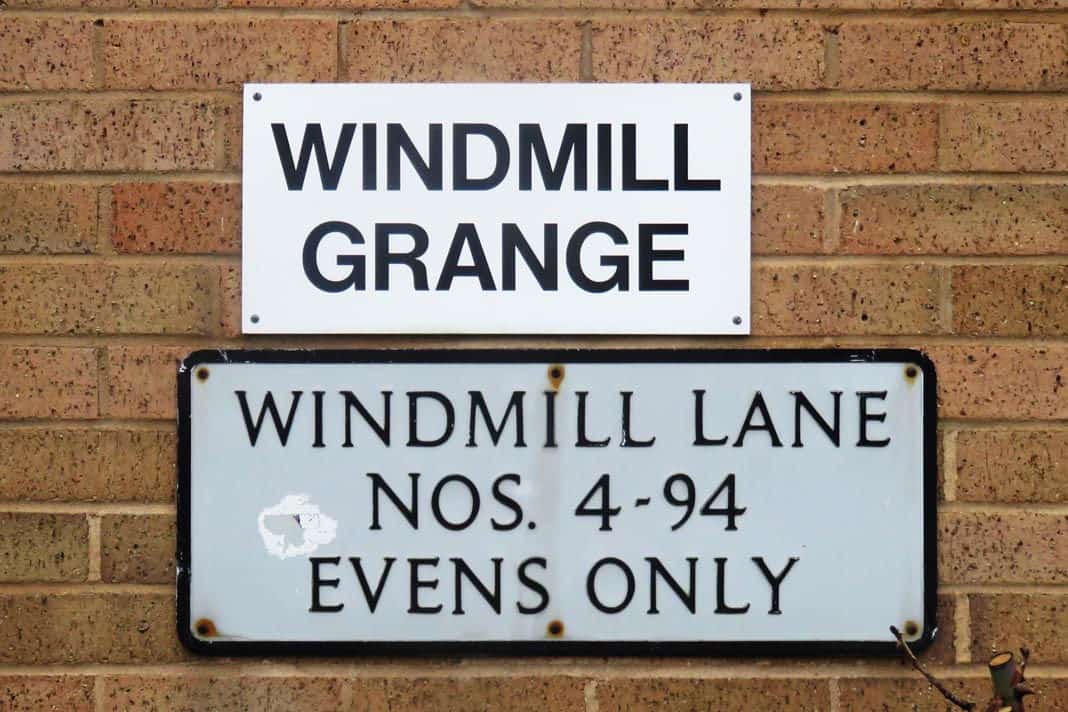
2 bedroom retirement property for sale in Windmill Grange
Offers in region of £195,000, leasehold.
First floor flat for over 55s. Entrance hall, living room, kitchen, shower room, two bedrooms.

Court proceedings begin after police bring murder charge

Photo: Michael Grimes on Flickr (CC BY-NC-SA 2.0) A Histon man has been charged with murder after the body of Gabriella Rudin, 75, was discovered at a house in Melvin Way, Histon, on 31 December.
Martin Rudin, 81, also of Melvin Way, was arrested on 9 January and appeared at Cambridge Magistrates’ Court the following day. He was remanded in custody to appear at Cambridge Crown Court on Thursday 12 January for a preliminary hearing.
Changes made to appointment system as Firs House battles capacity issues
Overwhelmed by excess demand for on-the-day appointments, Firs House surgery has amended its proposed system for booking appointments online to help deal with the intense pressure on medical services. This pressure has led to the surgery having to suspend its new online Patient Triage platform for at least some hours each day to give staff time to assess the medical requests submitted.
Concerned that misinformation about its new system was being discussed on social media, the surgery clarified that the system wasn’t faulty, “This is the same process that was used when the telephone booking system was at capacity”, they explained.
Originally it was intended that the online platform would also be open for bookings overnight and during weekends, but this will no longer be the case – even after the current capacity crisis is over. Based on experience in other surgeries, Firs House expects the number of potential appointment requests would then be too great to enable them to prioritise on the next working day.
Advert
Improvements
Despite the capacity issues, the online appointment booking platform introduced by Firs House at the start of the year has been effective at improving wait times for priority appointments. And it has been signalling alternative healthcare providers when medical services aren’t available or required, enabling medical staff to reach the most urgent cases sooner. Experience at other surgeries suggests that as many as 1 in 5 requests could be signposted elsewhere as the system settles down.
Also, although the booking system has had to be suspended each day at some point during the morning, it has on some days been reopened briefly in the afternoon if any appointments are still available. When all bookings were coming in by phone, patients were normally told to try again the following day.
“A little bit of tolerance”
The expectation, based on experience elsewhere, is that it will take at least three months for Firs House and the community to get into their stride and use the new system to its best advantage.
In recent days feedback from surgery staff as well as patients confirm it is now working far better than first-past-the-post telephone systems without any triage capability. One patient posted on social media “I prefer this new system and am very grateful that Firs pursued a different system when the phone system wasn’t working. I completed the form yesterday and spoke with a doctor today.” Another commented “My wife and I have had excellent responses [to an online request] so far, with medication prescribed, and non-urgent appointments set up for next week.”
Some social media comments have been critical of the surgery, but others have recognised the huge pressures they are working under and defended it. One patient pointed out “In a nutshell, too many patients need the services of the local GP team, which it simply doesn’t have the resources to meet. If we want to complain, then maybe to higher authorities than Firs/Telegraph Street may be a way forward.”
Another person called for the community to “be a bit tolerant of initial teething problems.” Someone posted: “We need to be patient while [the system] beds in and the staff get used to it. It’s always hard when a new process and system are introduced, especially if it gets swamped like today. I have a friend in Haddenham whose GP surgery uses this and has for a while. She says it’s way more efficient that the first come first served on the phone system.”

Council to vote on new powers for residents
Members of the community who want the Parish Council to consider a new idea, take action on a suggestion, or tackle a problem or concern, could get the chance to make their case in person in future.
As things stand, residents aren’t allowed to speak at a Council meeting unless the matter they want to raise is on a meeting agenda – an agenda which is set by the Council. But a proposal to change to a rule that governs how the village’s Council meetings are conducted would give Histon & Impington residents the right to speak formally at meetings and have their position recorded in the minutes.
This proposed amendment to the rules – which are known as ‘standing orders’ – is being put forward by Chair Denis Payne. If endorsed by Councillors, this would bring the village into line with other Councils, including South Cambridgeshire District Council.
Denis told HI HUB: “Members of the public can already make representations, answer questions and give evidence at Council meetings, but only if this relates to an item that is on the agenda set by Councillors. By removing this restriction I hope we can improve community engagement and respond more effectively to the people who elected us.
“If agreed, this would allow residents to ask questions or raise topics at the start of meetings. It’s a small change – but an important one as currently there is no means for the public to formally raise an issue or concern with the Council.”
This proposal will be made at the next meeting of the full Histon &Impington Parish Council on 16 January, but however Councillors vote on this, the rules will remain as before for this meeting.
Money month
Other key decisions to be taken at the meeting will relate to income and expenditure for 2023/4. The Finance and Governance Committee is proposing a 2.86% increase in the element of Council Tax that can be spent by the Parish Council. This would mean residents in Band D properties paying £123.27 for direct use by the village in 2023/4, compared with £119.94 this year.
Other items on the agenda include HI Friends request for £17,500 towards the cost of the Wellbeing Team. Connections Bus Youth Work is also asking the council to consider funding request for £25,575 for youth work provision in the village.
The next meeting of the full Parish Council will take place on Monday 16 January in the Community Room on the Rec, starting at 7.30pm. All Histon & Impington residents are invited to attend to listen to the debates, and any resident wishing to address the meeting on these or any other agenda item can speak at the meeting. For full details, see the agenda here. To speak at the meeting, contact the office to request a slot. Email clerk@hisimp-pc.gov.uk

Bus fares to Cambridge increase as Stagecoach reacts to rising costs
Passengers across Cambridgeshire are facing fare increases for 2023. A ticket from Histon and Impington to central Cambridge (Town Zone) will now cost £4.50 per day with the DayRider option, or £2.25 per day with the best value option, a MegaRider Xtra.
From Cottenham to Cambridge (Plus Zone), a DayRider ticket will increase to £7 per day, while the 28-day value ticket rises to £3.50 per day.
Across the region, the hikes add an average of 39p onto the cost of daily adult bus travel.

Network price rises take effect from January. Photo: David Berry Each of the region’s zones has the same ticket options available as before, but pricing structures may vary to reflect the distance travelled in each zone.
There is better news for passengers travelling via Park & Ride from sites around Cambridge, with prices there remaining frozen for the seventh year in a row. Return tickets at all sites, including Milton, start at £3.50 and children under 16 can still travel for free with a fare-paying passenger.
Also, despite the hikes, all single bus fares are capped at £2 across the network between January and March 2023 as part of a Government scheme to help combat the rising cost of living.
Stagecoach commented: “Fares contribute to the day-to-day running of our services as well as investment in improvements for our communities. While part of this is down to rising costs, we’ve also been making important investments to give you an even better experience”.
For more information visit Guide to East England Bus Tickets & Prices │Stagecoach (stagecoachbus.com) and www.cambridgeparkandride.info

Plans submitted for conversion of landmark property on The Green

Proposed changes to a property facing the brook (pictured right) would affect views of The Green. Photo: David Berry A planning application for a building project at number 17 The Green is being drawn to the attention of local residents due to the visual impact it could have on the area.
The application requests permission to build a two-storey rear extension; replace a part single-storey part two-storey side extension; and construct a loft conversion with front and side facing dormer windows.
It has been reviewed by the Parish Council Planning Committee, who are keen for members of the public to be made aware of the application and supply comments, both positive and negative.
The property is located within the Conservation Area and the application includes a proposal to restore some historic features of the house. These include a central entrance door at the front and a thatched roof with dormers.
Planning Committee Chair Simon Jocelyn told HI HUB: “This proposal could affect views across The Green, so the committee would like the general public to have an opportunity to express their views on it. For this reason we have arranged a 3-week extension to the application, to enable us to gather the views of the community.”
He continued: “As with all Planning Applications in our villages, the views of residents is important and any comments made on an application are reviewed by the committee before a recommendation is made to South Cambridge Shared Planning.”
Find full details of the planning application here. Submit your views on the application to admin@hisimp-pc.gov.uk. Alternatively, submit comments online direct to Greater Cambridge Planning.
Top award for local library volunteers

Volunteers from Histon library are among the team recognised for the initiative, seen as a lifeline for many in the community. The hard work of local library volunteers was recognised last month as Cambridgeshire’s Library@Home initiative was presented with The Queen’s Award for Voluntary Service.
During the ceremony, library helpers were presented with an engraved crystal and a certificate, signed by the late Queen (one of the last documents to be signed by Her Majesty.) The prestigious award is the equivalent of an MBE for volunteer groups.

A team of volunteers at Histon Library are part of the scheme, bringing books and audio materials to local residents who find it difficult to get to the library for a range of reasons, including disability, illness or caring responsibilities.
Visits can be tailored to residents’ specific needs, with volunteers delivering people of all ages large-print books, health literature and even hearing aid batteries straight to their homes. Helpers even have time to stop for a chat.
Cambridgeshire County Council Volunteer and Health Development Manager, Elizabeth Sheppard says: “This is brilliant recognition for the amazing work our Library@Home volunteers do. These dedicated volunteers have provided a lifeline of friendship and books over many years, and especially during the Pandemic.”

The crystal award and certificate will be on show at libraries across Cambridgeshire throughout the year. And in May 2023, two lucky volunteers with the Library@Home service will attend a garden party at Buckingham Palace along with other recipients of the 2022 Awards.
If you’d like to find out more about volunteering for your local library, email volunteers@cambridgeshire.gov.uk or ask in your local library.

Women’s Institute ‘tree of hats’ heads off to help the homeless
The popular HI Friends Christmas Tree festival has played a part in helping to provide some much needed warmth for those in need this year thanks to many hours of hard knitting by the Histon & Impington Women’s Institute (WI).

The colourful creations by the Histon & Impington WI which will now keep the homeless warm this winter. Photo Sophie Howson. One hundred and twenty beautifully created bobble hats, hand-knitted by the 64 members of Histon and Impington WI formed their entry to December’s festival. These have now been donated on their behalf by the Daily Bread Co-operative to organisations such as Wintercomfort and The Lockon in Fair Street, both of which work to provide warm winter clothing for the City’s homeless and rough sleepers.
Speaking to HI HUB about the project, organiser Sophie Howson said:
“As a WI we decided that it would be lovely to have a project that would help others and the Christmas Tree Festival was an excellent vehicle. The members were very enthusiastic and many learned, or re-learned, to knit together and make hats and colourful pom-poms for the project. We have future projects planned now as it has been a really excellent and fun thing to do with a philanthropic outcome. We always want to encourage more members to the WI and would love to see some new faces at future meetings”.
The next branch meeting is at Histon Methodist Church Hall at 7.30pm on Thursday 18th February and new members are very welcome. There will also be an illustrated talk on ‘Literary Cambridge’ by Peter Hains on Thursday 19th January. Full details here.
Get in touch, or find out more, by emailing hisimpwi@gmail.com

The house that Dave built – passing the Passivhaus standards
Park Lane residents Dave Pountney and Jo Bishop recently moved into their brand new Passivhaus where Val Robson was invited to take a look around and find out more about the story behind this innovative building project
The first Passivhaus was built in 1991 in Austria for Professor Wolfgang Feist, a physicist at the University of Innsbruck. Wolfgang Feist believed it possible that a house could be built which had no need for energy or fuel to maintain a comfortable living temperature all year-round. Worldwide, there are now over 70,000 Passivhaus buildings including Dave and Jo’s newly constructed detached house on Park Lane which they moved into last autumn after thirteen happy years overlooking the windmill in Impington.
Construction of a Passivhaus tends to cost approximately 20% more than a traditionally constructed house due to the high quality of materials used and the need to use specialist trades people for some elements of the work but it’s likely to be valued around 10% more than its traditional equivalent and the ongoing lower energy expenditure, especially in these current times, is an important benefit to be considered.
Keeping it natural
With over fifty years experience within the construction industry, Dave has been involved in the building of about twenty five Passivhaus structures standing him in good stead for the challenges that lay ahead. To be officially certified as a Passivhaus, a building must adhere to some basic principles which minimise heat loss and make maximum use of natural heat sources whilst also ensuring that fresh air is well circulated.

Polystyrene foundations Photo: David Pountney Laying concrete on top of polystyrene foundations Photo: David Pountney The building has to be free of thermal bridges which would allow heat to be conducted away from the building. Dave and Jo’s house is built on a 300ml thick polystyrene raft located underneath the concrete base while the walls are 325ml thick and pumped full of cellulose – basically chopped up newspaper. The roof has 300ml of cellulose with an extra 100ml of solid insulation on top to be sure it complies with the Passivhaus requirements.
The outside of the property is clad with Siberian larch, a hardy tree native to Western Russia, and, due to the intense cold in which these trees exist, they grow very slowly. This makes for a very tight grain giving great durability as well as an incredibly attractive finish. “When I ordered the Siberian larch”, Dave elaborated “the supplier told me that he did not expect to be able to source any more due to the impending war in Ukraine so to be sure that I ordered sufficient for the work needed”.
As required by the Passivhaus standard, all of the windows are triple glazed and there has to be extremely good airtightness so a special tape is used to seal all joints in the house including around the windows, between panels on the walls and any other joints such as around pipes and ducts.
A house with standards
MVHR in plant room Photo: David Pountney 
Air ducts showing sealant tape Photo: David Pountney The high standards of insulation and lack of air leakages mean very little heat is required to maintain the house at a comfortable living temperature. Dave explains “all the heat in the house comes from body heat, the sun and any appliances”. During my visit, the house was a very comfortable 20C and had a fresh, light and airy feel to it; attributable largely to the efficient ventilation. Another key element of a Passivhaus.
The air circulation is controlled by the MVHR (Mechanical Ventilation with Heat Recovery) unit located in the ground floor central plant room. A network of large ducts connect this to inlets and outlets in the ceilings of the house and the living areas have inlets in the ceiling which push fresh filtered warmed air into the room. The kitchen, utility room and bathrooms have outlets, sucking out air, which then goes through the heat exchanger where 85% of the heat is re-used to warm the incoming fresh filtered air. The stale air is then expelled. Alongside the fresh air feel to the house there is no sense of the air moving which makes for a very calming and quiet atmosphere.
Come in from the cold
Mid construction Photo: David Pountney For use during extreme cold, the house is fitted with underfloor heating on the ground floor and, shortly after my visit, this was put through its paces during a highly unusual period of sub zero temperatures which persisted for ten days. Dave reported back to me “I have to admit that, when it was -9C outside, we were incredibly grateful for this feature!”. A Passivhaus is allowed to have a heating system, but it has to use less than 15 kilowatt hours per square metre per annum to comply – the average yearly figure for existing houses in the UK is 200 kwh/m2!
Water tank in plant room Photo: David Pountney The plant room is also home to the hot water tank. This is a very sophisticated piece of kit with its own diaphragm that moves up and down so that it is only containing the amount of water the occupants wish to heat. Dave controls this from an app on his phone and the LEDs on the side of the tank show the heating and water level statuses too.
Although the main construction is complete on the house there is still much work to be done before Dave and Jo get official Passivhaus certification on their home. Shading and overhangs will be added to the windows to ensure that they are not only protected from the elements during the cold months but also from the sun during hotter times. The orientation of a Passivhaus is also crucial with the majority of the windows needing to be facing south to catch the maximum sun. Dave and Jo were fortunate in that the plot is orientated in a way that allowed the house to be constructed in optimum orientation to make the most of solar energy. They also have fourteen solar panels which help with the energy bills.
The final test
There then remains one final, but very important, test that Dave has to commission in order to gain the coveted Passivhaus certification and this is to prove that the house falls within the Passivhaus standards of airtightness. Explaining what’s involved Dave told me “they will bring in a big fan which will be set up in one of the door or window openings. In order to pass the test there should be no more than 0.6 air changes per hour at a pressure of 50 Pascals. This equates to having no one hole, or several combined, which would total more than the size of a 20p piece throughout the entire house”.
Wall plaque received after certification is completed Once this test is complete, and all the documentation is passed by the The Passivhaus Trust who are the official UK affiliate of the International Passive House Association, Dave and Jo will receive a plaque which can take pride of place on the wall of their fabulous new home!